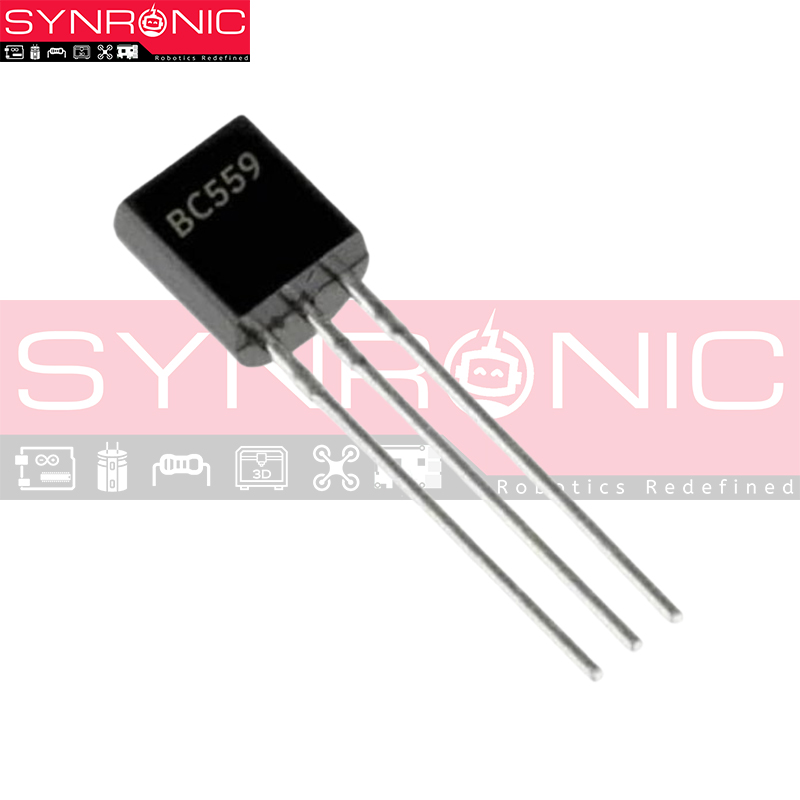
The BC549 transistor is a general-purpose NPN bipolar junction transistor (BJT) widely used in various electronic circuits for low-power and low-noise applications. Here’s an in-depth look at its features, working principles, and typical uses: Overview The BC549 transistor is part of the BC547/BC548/BC549 transistor series, which are known for their versatility and reliability in amplification and switching applications. It is commonly found in audio signal processing and other low-power applications due to its low noise figure. Key Features: Type: NPN Bipolar Junction Transistor (BJT) Maximum Voltage Ratings: Collector-Emitter Voltage (Vce): 30V Collector-Base Voltage (Vcbo): 30V Emitter-Base Voltage (Vebo): 5V Maximum Collector Current (Ic): 100mA Power Dissipation (Ptot): 500mW Current Gain (hFE): 110 to 800 Low Noise: Suitable for audio and low-level signal amplification Package: TO-92 Pin Configuration: The BC549 transistor has three pins: Collector (C): Connected to the load. Base (B): Controls the transistor; a small current here controls a larger current between the collector and emitter. Emitter (E): Connected to ground or the common terminal in circuits. Working Principle: The BC549 operates in three different regions based on the base current: Cutoff Region: Both the collector and emitter currents are zero because the base-emitter junction is not forward biased. The transistor behaves like an open switch. Active Region: The transistor operates as an amplifier. A small current applied to the base controls a much larger current flowing from collector to emitter. Saturation Region: The transistor acts as a closed switch with maximum current flow from collector to emitter, as the base-emitter junction is fully forward biased. Applications: Audio Amplifiers: Used in various amplifier configurations, including common emitter, common collector, and common base amplifiers. Particularly suitable for audio signal amplification due to its low noise. Switching Applications: Acts as a switch in digital and analog circuits, turning on or off larger currents using a small base current. Signal Processing: Suitable for low-level signal amplification and processing. Oscillators: Used in oscillator circuits to generate periodic signals. General Purpose: Utilized in various low-power and low-noise applications. Advantages: High Current Gain: The high hFE range allows significant amplification with low base current. Low Noise: Provides clean amplification of audio signals, making it ideal for audio applications. Versatility: Can be used in a wide range of applications, from switching to signal processing. Compact Size: The TO-92 package is small and easy to handle in various circuit designs. Affordable and Widely Available: Cost-effective and easy to find in most electronic component stores. Implementation Tips: Proper Biasing: Ensure proper biasing of the base-emitter junction to operate the transistor in the desired region (cutoff, active, or saturation). Heat Management: Though it has a low power dissipation, consider heat management in high-current applications. Correct Pin Identification: Double-check the pin configuration to avoid incorrect connections, which could damage the transistor. Coupling Capacitors: In amplifier circuits, use coupling capacitors to block DC components and pass only the AC signal. The BC549 transistor is a versatile and reliable component in electronics, valued for its excellent performance in low-power and low-noise applications. Whether you’re building amplifiers, switches, or signal processing circuits, the BC549 provides a dependable solution for your needs. Category: Electronic Components